
Do Jewish Followers of Jesus Remain Jewish?
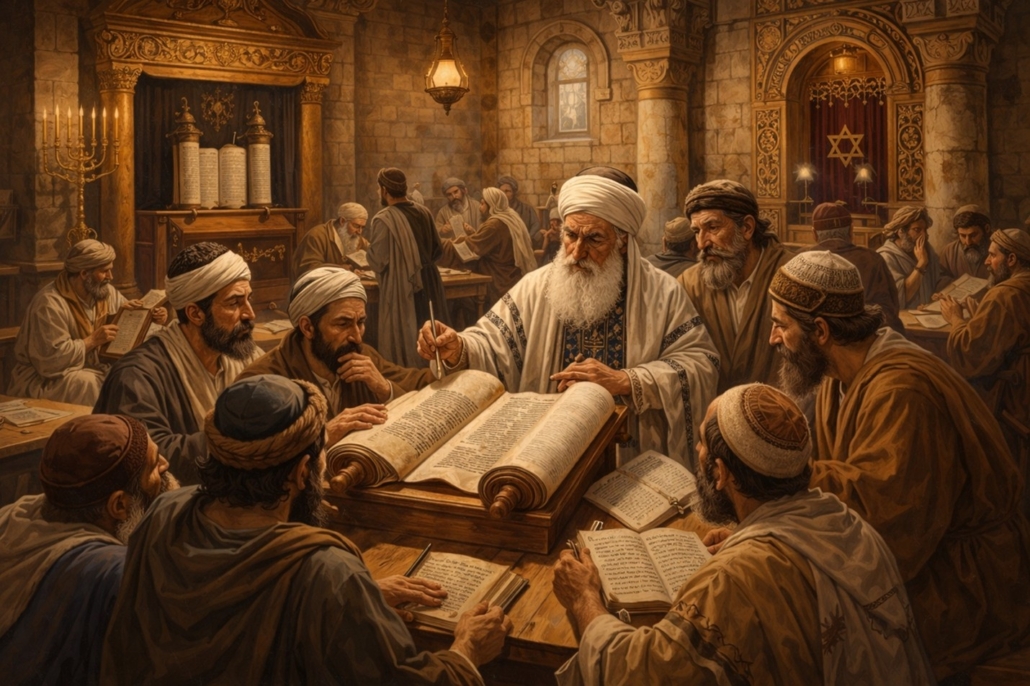
The phrase “Jewish follower of Jesus” may sound like a contradiction in terms. For many Jews and Christians, once a Jewish person places their trust in Yeshua (Jesus), it is assumed to be the moment that person leaves the Jewish people and enters an entirely different worldview and way of life. That assumption is understandable given the centuries of Church history that did institutionally compel Jewish followers of Jesus to abandon their Jewish identity and way of life. This legacy continues to influence Jewish followers of Messiah today who think they should abandon their Jewishness upon trusting Yeshua, even without the systematic, institutional compulsion of many Christian denominations. However, this outcome cuts against the expectation and desire of the Jewish texts that first speak about Yeshua and his followers: the New Testament itself.
When read carefully and historically, the New Testament does not teach or compel Jewish followers of the Messiah to abandon their Jewish identity and way of life. On the contrary, it consistently assumes that Jewish followers of Messiah remain Jews, especially as they live out their God-given calling as Jews in a rejuvenated way.
The New Testament Explicitly Shows the Continued Jewishness of the Disciples
The simplest place to begin is to see how the New Testament authors talk about themselves and others.
Paul is often imagined as the prototypical “convert” who abandoned his Jewish identity upon recognizing Yeshua is the Messiah. Yet Paul himself repeatedly refers to himself as Jewish after becoming a follower of Yeshua. For example,
- While on trial, Paul declared plainly, “I am a Jew” (Acts 22:3–4; 21:39).
- When writing to the congregation in Rome, Paul said, “Has God rejected his people? By no means! For I myself am an Israelite” (Rom 11:1).
- To the Philippians, he wrote, “circumcised on the eighth day, of the people of Israel, of the tribe of Benjamin” (Phil 3:5).
- In an argument with Peter, Paul said, “We are Jews by nature” (Gal 2:15).
Paul never describes himself as a “former Jew” or as a “Christian.” He understood his loyalty to Yeshua as something that naturally fits with his Jewish identity.
Paul was not the only example of a Jewish follower of Messiah who remained Jewish. Luke refers to “a Jewish man named Apollos” who taught others to follow Yeshua (Acts 18:24). James, the leader of the Jerusalem community, speaks of “many thousands among the Jews who have believed” (Acts 21:20). The language is strikingly unremarkable. Jewish followers of Messiah are just that, Jews.
Jewish Followers of Yeshua Continued to Live as Jews
The Jewish followers of Yeshua were not Jewish in name only. They continued to live and worship within Jewish community and Jewish norms and practices. If following Yeshua meant leaving Judaism, this is not what we would expect to see in the New Testament, but it is.
Circumcision and Following Moses
In Acts 21:17–26, James and the Jerusalem leaders mention how there were “thousands among the Jews who believed” and they were “all zealous for the Torah” (Acts 21:20). This crowd heard a rumor that Paul taught Jews in the diaspora to not circumcise their sons or follow Moses and were preparing to riot in protest (Acts 21:21). However, James and the leaders knew these rumors were false and that Paul himself “kept the Torah” (Acts 21:24).
To demonstrate his loyalty to Torah, Paul went to the Temple and sponsored the vows of men who were dedicating themselves to heightened Torah-observance. Earlier in Acts, we see Paul having Timothy—whose mother was Jewish—circumcised (Acts 16:3). This is in keeping with his “rule” shared in 1 Corinthians 7:17–20 where he teaches that Jewish followers of Messiah should remain Jewish,
“Only, as the Lord has assigned to each one, as God has called each, let him walk in this way. I give this rule in all of Messiah’s communities. Was anyone called when he already had been circumcised? Let him not make himself uncircumcised…Let each one remain in the calling in which he was called.”
Shabbat and the Festivals
Yeshua himself and his earliest Jewish followers continued to participate in the synagogue and operate according to the Jewish calendar.
- Yeshua teaches in synagogues on Shabbat (Mark 1:21; 6:2).
- The disciples continued to observe Shabbat after Yeshua’s resurrection (Luke 23:56).
- Paul continued to go to synagogue on Shabbat “as was his custom” (Acts 17:2).
- Yeshua and the disciples had a Passover meal (Mark 14:12–26).
- Luke refers to “the Fast” of Yom Kippur (Acts 27:9).
- The disciples were at the Temple for Shavuot (Acts 2 cf. Acts 20:16).
- Yeshua celebrated Hanukkah at the Temple (John 10:22–23).
Other staple Jewish practices maintained by Yeshua and the disciples include reciting the Shema (Mark 12:29) and gathering for set daily prayer times (Acts 2:42; 3:1).
Yeshua and the disciples set the best example of how a Jewish follower of Yeshua ought to live their life and that example included participation in the synagogue on Shabbat, following the Jewish calendar, and engaging in the daily prayer rhythms of the wider Jewish community.
A Renewed Way of Walking as Jews
The New Testament does speak about a change, not a change in Jewish identity, but a change in our way of walking with God.
In Ezekiel 36:26–27, God says to Israel, “and I will give you a new heart, and a new spirit I will put within you. And I will remove the heart of stone from your flesh and give you a heart of flesh. And I will put my Spirit within you, and cause you to walk in my statutes and be careful to obey my rules.”
Like the prophets before him, Paul uses traditional Jewish ethical language, “halakha,” which means “walking,” to describe the moral and communal obligations of those who have received God’s Spirit.
Paul says we are to:
“Walk by the Spirit, and you will not gratify the desires of the flesh…Now the works of the flesh are evident: sexual immorality, impurity, sensuality, idolatry, sorcery, enmity, strife, jealousy, fits of anger, rivalries, dissensions, divisions, envy, drunkenness, orgies, and things like these. I warn you, as I warned you before, that those who do such things will not inherit the kingdom of God” (Gal 5:16–21).
This is a high moral standard! How can we live up to such standard? Paul goes on, “But the fruit of the Spirit is love, joy, peace, patience, kindness, goodness, faithfulness, gentleness, self-control…If we live by the Spirit, let us also keep in step with the Spirit” (Gal 5:22–25).
When Jewish people place their trust in the Messiah, they receive the Spirit of God which empowers us to walk in obedience to God in a more consistent and reliable way than ever before, as promised in Ezekiel.