
What kind of a leader does God want for Israel?

A Crisis of Leadership
Our current news headlines seem to indicate that the world is experiencing a significant crisis of leadership. Almost every day, it feels like we hear stories of political corruption, financial greed, selfishness, incompetence, negligence, and moral failure among our leaders. Far too often, those in power utilize their positions for their own political or economic ends rather than truly seeking the betterment of others. In a world where leaders seem to have lost their way, we would do well to return to the wisdom of the Hebrew Scriptures. Let’s consider together: what kind of a leader does God want for Israel?
Leaders as Shepherds
In the Scriptures, the role of a leader is often likened to that of a shepherd caring for his sheep. As a shepherd’s job to protect and guide his flock, so too God’s intention is for human leaders to ‘shepherd’ the people for their own good. A famous example is King David, who as a young man honed his skills as a shepherd. When he became leader of the nation, God said of him, “You shall be shepherd of my people Israel, and you shall be prince over Israel” (2 Samuel 5:2). Another example is Moses. After shepherding sheep in the land of Midian for forty years, God called Moses to lead Israel out of slavery in Egypt with his shepherd’s staff. Other examples of shepherds in the Scriptures include the patriarchs Abraham, Issac, and Jacob, Joseph, and the prophet Amos. God Himself is described as Israel’s chief shepherd by the prophet Isaiah: “He will tend his flock like a shepherd; he will gather the lambs in his arms” (Isaiah 40:11). As King David so beautifully put it in Psalm 23: “The Lord is my shepherd; I shall not want. He makes me lie down in green pastures. He leads me beside still waters. He restores my soul…” (Psalm 23:1–3).
The Problem: Selfish Shepherds
The problem with human shepherds, however, is that far too often our leaders mistreat the sheep under their power. In ancient Israel, God sent the prophet Ezekiel to call out the leaders for their misconduct: “Thus says the Lord God: Ah, shepherds of Israel who have been feeding yourselves! Should not shepherds feed the sheep?” (Ezekiel 34:2). This should sound familiar to our own time: leaders following their own selfish interests rather than working for the benefit of the people. As a result of the lack of leadership, the people of ancient Israel were exiled from their land. God says: “My sheep were scattered over all the face of the earth, with none to search or seek for them” (Ezekiel 34:6). God then reprimands the selfish shepherds of Israel: “Thus says the Lord God, Behold, I am against the shepherds” (Ezekiel 34:10). He promises to remove the shepherds from authority and save the people of Israel from their hands (Ezekiel 34:10). Incredibly, God promises that one day He Himself will search for and rescue the people of Israel as a good shepherd does for his lost sheep. He promises, “For thus says the Lord God: Behold, I, I myself will search for my sheep and will seek them out” (Ezekiel 34:11). God guarantees, “As a shepherd seeks out his flock when he is among his sheep that have been scattered, so will I seek out my sheep, and I will rescue them from all places where they have been scattered…” (Ezekiel 34:12).
Yeshua of Nazareth: The Promised Shepherd of Israel
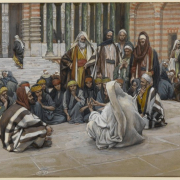
It is in the context of these promises that we should understand the arrival of Yeshua of Nazareth to Israel in the first century CE. Following God’s promise through Ezekiel to gather and shepherd the scattered sheep of Israel, Yeshua declared his mission of national restoration: “I was sent only to the lost sheep of the house of Israel” (Matthew 15:24). Yeshua explains his identity as thus: “I am the good shepherd. The good shepherd lays down his life for the sheep” (John 10:11). Unlike the shepherds of ancient Israel and our own day, Yeshua does not use his leadership position for selfish gain. Rather, he gives his own life for the benefit of the sheep: his people. Yeshua contrasts his leadership approach as the good shepherd with that of a ‘hired hand.’ The hired hand is the kind of leader who “sees the wolf coming and leaves the sheep and flees, and the wolf snatches them and scatters them” (John 10:12). Unlike this, Yeshua is the leader who cares for the sheep with compassion, love, and self-sacrifice. Thus, he affirms again: “I am the good shepherd. I know my own and my own know me, just as the Father knows me and I know the Father; and I lay down my life for the sheep” (John 10:14–15). He has personal, intimate knowledge of each of the sheep whom he guides. He Himself is God and is in the closest relationship with the Father (John 1:18). Yeshua is the promised leader of Israel, the good shepherd, on a mission to fulfill God’s promises to personally rescue the scattered sheep of Israel. He sums up his approach to leadership as service, “For even the Son of Man came not to be served but to serve, and to give his life as a ransom for many” (Mark 10:45).
Conclusion: The Return of the Lost Sheep
In today’s tumultuous world and crisis of leadership, the Scriptures provide the hope and comfort of the promised leader of Israel. Like the people of ancient Israel, we too have become lost and scattered sheep. The prophet Isaiah declares: “All we like sheep have gone astray; we have turned—every one—to his own way…” (Isaiah 53:6). Yeshua came into the world to give himself for his sheep. He came to rescue and restore the scattered sheep of Israel. The apostle Peter puts it like this: “For you were straying like sheep, but have now returned to the Shepherd and Overseer of your souls” (1 Peter 2:25). May we return to Yeshua, the true leader of the people of Israel. He is the Good Shepherd who restores our souls.




 Public Domain
