
Who Were Jesus’s Women Followers?
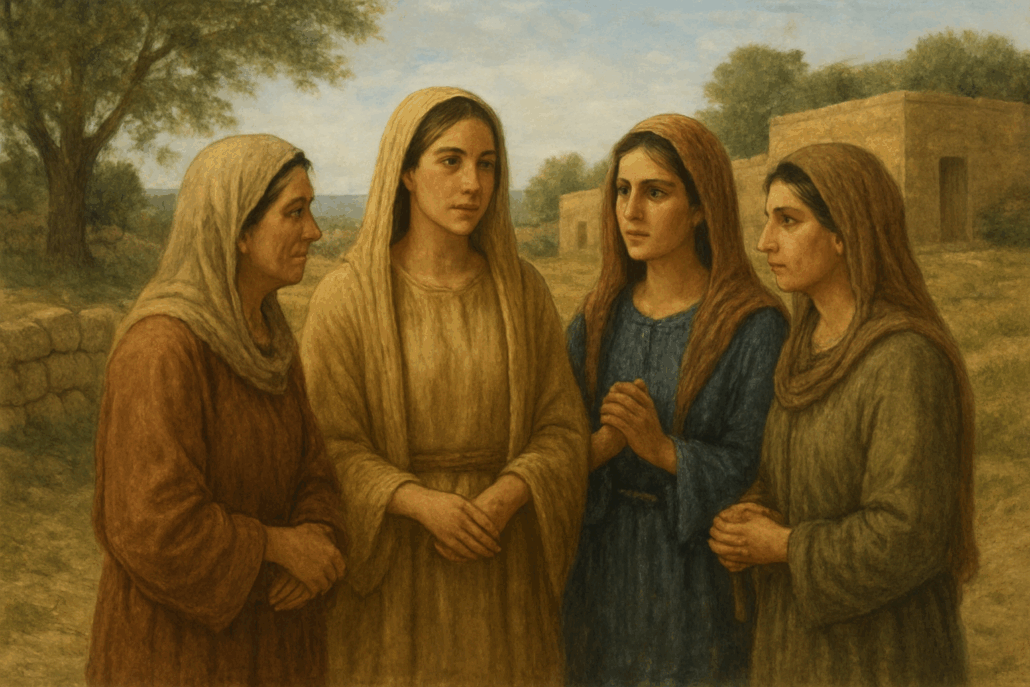
Did you know that many of Jesus’s followers were Jewish women? Yes, many Jewish women have come to believe that Jesus is the Messiah, starting with his first followers two thousand years ago. Today, Jewish women from all around the world, whether from a secular or religious background, recognize that Jesus is the fulfillment of what God promised our ancestors.
Three Jewish women stand out in the New Testament as being very devoted to Jesus’s teachings, and they provide inspiration to Jewish women today. Through learning about these three devoted Jewish women, we can see how the love of Jesus extends not only to men, but that he is very near to all who call on Him.
Women in First-Century Israel
Jesus’s ministry began in first-century Israel, where Jewish life was centered around synagogues, the study of the Torah, and the Temple in Jerusalem. In this religious and traditional society, while women held central roles in family and economic life, their legal, public, and religious participation was limited.
However, Jesus gave women a profound place in his ministry, as we can see through (1) Miryam (Mary), the mother of Jesus, (2) Miryam of Magdala (Mary Magdalene), and (3) Miryam of Bethany. One might be led to believe that all of Jesus’s women followers were named Miryam! That’s not the case, but there is much we can learn from these three Miryams.
As we will see below, the lives of these three women show that each shared deep commitment to Jesus and was cared for by him in unique ways. Together, they demonstrate what it looks like to follow the Messiah with faith and love. Their stories reveal that a true relationship with Jesus is not about social status or religious position, but about having an open and responsive heart to God’s calling.
Miryam, the Mother of Jesus
The story of Miryam (Mary), the mother of Jesus, begins with a courageous “yes” to God’s plan. Miryam, a young woman from Nazareth, was visited by the angel Gabriel, who told her that she would conceive and give birth to the Messiah (Luke 1:26–38). Though she was perplexed, she responded with obedience and surrender.
Miryam played a significant role in Jesus’s early years as his mother and became one of the first to believe in his ministry. For example, Jesus performed his first miraculous sign at her request during a wedding feast, turning water into wine (John 2:1–11). Miryam also remained steadfast during Jesus’ crucifixion, standing near the cross as he suffered (John 19:25). Even in that painful moment, she showed unwavering devotion to the Messiah.
Miryam of Magdala: Entrusted with the Gospel
The journey of Miryam of Magdala illustrates what a transformed life in the Messiah looks like. Miryam was a Jewish woman deeply burdened and tormented by seven demons (Luke 8:2). When Jesus called her name, she was completely set free. From that moment, she became his devoted follower.
Throughout Jesus’s ministry, Miryam remained faithful, even at his crucifixion, showing her deep love and loyalty (John 19:25). She was also the first person to see Jesus after he rose from the grave. When she recognized him after his resurrection, she cried out in joy, “Rabboni!” (meaning “Teacher” in Aramaic) and embraced him tightly. Jesus then commissioned her to share the news with his disciples (John 20:16–18). Miryam obeyed and joyfully declared, “I have seen the Lord!” This shows that Jesus not only but entrusted her with the greatest evidence of the Messiah in history: the resurrection of the Messiah from the dead!
This is striking because in the culture of the first-century Jewish life, women were not considered reliable witnesses in court.1 If the story of the resurrection had been made up, no one would have chosen a woman to be the original witness. Yet, God chose Miryam, a woman, to be the first to see and proclaim the good news of Jesus’s defeat of death!
Miryam of Bethany: Commended for her Learning
Miryam of Bethany stands out as one of the most devoted disciples of Jesus. She beautifully demonstrates what a close, personal relationship with him looks like. On one occasion in the Gospel of Luke, Miryam sits at Jesus’s feet, listening intently to his words, while her sister Martha is busy with preparations. Jesus commends Miryam for her posture of devotion and desire to learn from Him, rather than scurrying about like her sister Martha. He says, “Mary has chosen what is better, and it will not be taken away from her” (Luke 10:39–42).
Miryam is also remembered for her courageous confession of faith when she declares Jesus as the awaited-Messiah of Israel (John 11:27). Later, six days before the Passover, she anoints Jesus with costly perfume (John 12:1–8). Jesus commends her again, explaining that her act of love was a preparation for his burial, as perfumes and oils were traditionally used in Jewish burial customs. Through this act, Miryam shows both her understanding of who Jesus is and her readiness to honor him, even as he approached the appointed time for his death.
Jesus’s Invitation to Jewish Women Today
Miryam, the mother of Jesus, Miryam of Magdala, and Miryam of Bethany: three Miryams who were Jewish women who loved and followed Jesus with deep devotion. Their lives show us that women had an essential role in his ministry, and they eagerly proclaimed him as the Messiah of Israel. Through their examples, we see that Jesus entrusted women with his mission and revealed himself to them in powerful, personal ways.
Today, their devotion continues to echo through the pages of Scripture, reminding us that women have a special place in God’s Kingdom. As these women illustrate, following Jesus is not a departure from our heritage, but the fulfillment of God’s promises to Israel. He loved these Jewish women, and his love is near to all, both women and men, who are seeking the true King.
Bibliography:
Josephus, Flavius. Antiquities of the Jews. Translated by William Whiston. Book VIII, Chapter 15. Peabody, MA: Hendrickson Publishers, 1987
Talmud, Rosh Hashanah. Translated by Isidore Epstein. London: Soncino Press, 1938.

 Public Domain

 Brian Crawford
