God’s Promise to Preserve Israel
For thousands of years, we have faced nations, empires, and peoples who have tried to eliminate us. We have witnessed Hamas’s commitment to its stated goal: “Israel will exist and will continue to exist until Islam obliterates it, just as it obliterated others before it.” 1Like many before them, they seek our destruction, and yet we are still here. Today Jewish people live around the world and are once again able to return to and thrive in our indigenous ancestral homeland, Eretz Yisrael. More than a century ago, Mark Twain observed, “All things are mortal but the Jew; all other forces pass, but he remains. What is the secret of his immortality?” 2 The answer is found in the Torah. Our continued existence is rooted in the covenant God made with our fathers.
God’s Covenant with Abraham
God’s covenant began when he made a promise to our father Abraham:
And I will establish my covenant between me and you and your offspring after you throughout their generations for an everlasting covenant, to be God to you and to your offspring after you. And I will give to you and to your offspring after you the land of your sojournings, all the land of Canaan, for an everlasting possession, and I will be their God (Gen 17:7–8).
This covenant is not temporary. God describes it as an everlasting promise that includes both a people and a land. God reaffirmed this covenant to Abraham’s son Isaac (Gen 26:3–5) and to Isaac’s son Jacob (Gen 28:3–4), whom God later named Israel (Gen 32:28). God chose Israel as his people, tying himself to his people with an everlasting love, as the prophet Isaiah writes, “For the mountains may depart and the hills be removed, but my steadfast love shall not depart from you, and my covenant of peace shall not be removed,’ says the LORD, who has compassion on you.” (Isa 54:10).
Preservation in Egypt
This special covenant and relationship with God, however, has not insulated us from struggle. When the Israelites went down to Egypt, they were enslaved for 430 years. Our ancestors experienced the brutality of bondage under Pharaoh. Fearing the growth of the Israelites, he attempted to destroy us by ordering the killing of all Hebrew baby boys.
And yet God preserved us. He saved Moses’s life and called him to lead our people out of slavery. When our enemies sought our destruction, God responded in judgment, striking Egypt with ten devastating plagues against their gods. The God of Israel freed us from Egyptian bondage. When we came out of Egypt and stood safely on the other side of the Red Sea, with our enemies drowned, we sang to our God:
The LORD is my strength and my song, and he has become my salvation; this is my God, and I will praise him, my father’s God, and I will exalt him. The LORD is a man of war; the LORD is his name (Exod 15:2–3).
God is the one who fights for Israel, because he loves us. He is our salvation.
The Covenant Confirmed at Sinai
But God did not only rescue us from Egypt. At Sinai he established his covenant with Israel by giving us the Torah and sealing that covenant with the blood of sacrifices:
Then [Moses] took the Book of the Covenant and read it in the hearing of the people. And they said, “All that the LORD has spoken we will do, and we will be obedient.” And Moses took the blood and threw it on the people and said, “Behold the blood of the covenant that the LORD has made with you in accordance with all these words” (Exod 24:7–8).
God did not stop there. he also revealed himself to Israel’s leaders to commune with us.
Then Moses and Aaron, Nadab and Abihu, and seventy of the elders of Israel went up, and they saw the God of Israel. There was under his feet as it were a pavement of sapphire stone, like the very heaven for clearness. And he did not lay his hand on the chief men of the people of Israel; they beheld God, and ate and drank (Exod 24:9–11).
God dwelled with us on the mountain and remained with us throughout our journeys. In choosing to walk with us, God expresses his love for us as his people.
Israel’s Unfaithfulness and God’s Faithfulness
We entered the land God promised to our fathers under the obligations of this covenant. Yet much of the Tanakh records our failure to remain faithful. The prophets repeatedly rebuked Israel for turning to other gods, which resulted in tragic consequences. But God never abandoned his people. While Israel has not always remained faithful to God, God has upheld his promise that his covenant with us is eternal. Even in exile, living among nations that seek our destruction, God says: “I will for their sake remember the covenant with their forefathers, whom I brought out of the land of Egypt in the sight of the nations, that I might be their God: I am the LORD” (Lev 26:45). The prophet Jeremiah warned Israel of judgment for breaking God’s covenant and committing idolatry. Yet even in Israel’s sin and rebellion, Jeremiah records God’s promise:
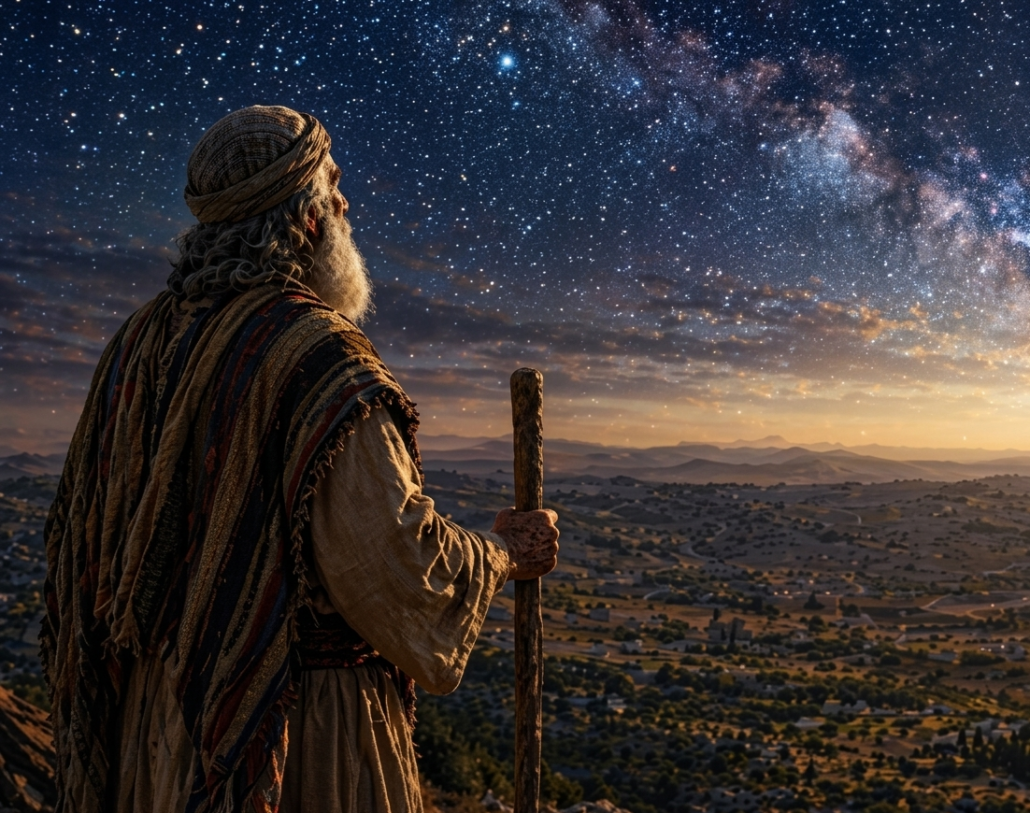
Thus says the LORD, who gives the sun for light by day and the fixed order of the moon and the stars for light by night, who stirs up the sea so that its waves roar—the LORD of hosts is his name: “If this fixed order departs from before me, declares the LORD, then shall the offspring of Israel cease from being a nation before me forever.” Thus says the LORD: “If the heavens above can be measured, and the foundations of the earth below can be explored, then I will cast off all the offspring of Israel for all that they have done, declares the LORD” (Jer 31:35–37).
God draws Israel to look up and around, to witness the fixed order of creation. He uses creation as a visible sign, a constant reminder of the eternal certainty of his covenant with Israel, his people.
Israel Still Exists
Why are we still here? Why do we continue to exist and thrive in our homeland even after centuries of persecution and even genocide? Because God is faithful to the covenant he made with Abraham, Isaac, and Jacob. God’s covenant with us is a promise of our protection as a people set apart to God. “For the LORD is good; his steadfast love endures forever, and his faithfulness to all generations” (Ps 100:5).