Moral Clarity Between Israel and Her Enemies: A Biblical Understanding of the Ethics of War
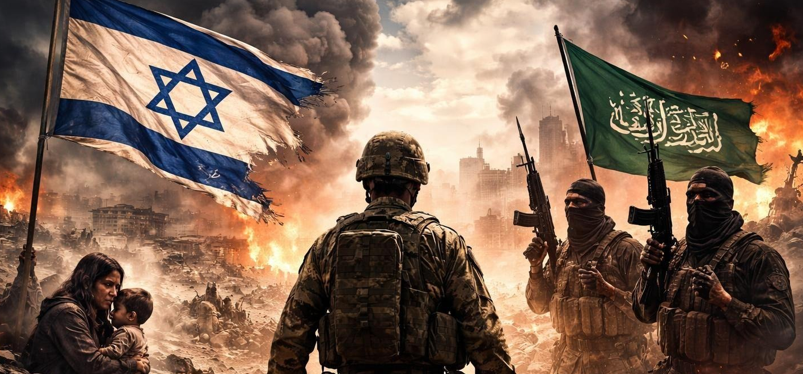
The world was turned upside down on October 7, 2023, when Hamas launched a brutal attack on Israel. Over 1,500 terrorists entered Israel with three clear purposes: to kidnap as many Israelis as possible—soldiers and civilians, young and old—to kill whoever they could not kidnap, whether women, children, babies, or the elderly, and to humiliate their victims through torture, rape, and the desecration of bodies. The attacks resulted in roughly 1,200 murders and approximately 250 hostages taken to Gaza.
The response from much of the Western world was initially encouraging, with many nations standing with Israel and supporting its intention to remove Hamas from power. However, that initial response was a long time ago. Since then, we have witnessed an alarming rise in antisemitism and groups justifying Hamas’s atrocities, which should be morally unfathomable. This represents a fundamental clash of moral worldviews—two incompatible ethical universes, each claiming the moral high ground.
The clash raises difficult questions: How do traditional Jewish teachings speak to war? What guidance exists for thinking clearly about justice, morality, ethics, and mercy in times of conflict?
Biblical Ethics of War
The Hebrew Scriptures have much to say about war and the ethics of killing. The foundation begins with Exodus 20:13: “You shall not murder.” God considers murder a sin, one of the Ten Commandments. But what is murder, and why is it wrong?
Genesis 9:6 answers both questions: “Whoever sheds the blood of man, by man shall his blood be shed, for God made man in his own image.” Because humans bear the divine image, killing a human is categorically different than harming animals or insects. This makes murder morally distinct.
However, Genesis 9:6 also establishes that those who commit murder must face justice themselves. The Bible distinguishes between murder and capital punishment: the former is condemned, and the other represents just execution of evildoers. The Torah specifies offenses warranting capital punishment including adultery, kidnapping, child sacrifice, and blasphemy. According to Torah law, executions by the state for these crimes are not murder but justice.
The Torah reveals extra layers to the ethics of killing. Exodus 21:12–14 distinguishes intentional from unintentional killing. We cannot judge moral guilt simply by noting someone caused another’s death; we must understand the killer’s intentionality. Did they plan and intend to kill? If there was no premeditated intent, the Torah classifies this as manslaughter, with exile—not death—as the penalty.
Critically, the Bible never defines killing during war as murder. Many Israelite leaders—Moses, Joshua, Gideon, David—commanded or participated in warfare, and Scripture never assigns moral guilt to them for doing so.
The Torah also mentions herem (the ban), a special commandment for Moses and Joshua’s time requiring the complete removal of seven idolatrous nations entering Canaan. This command was divinely limited to that specific historical context and does not apply today. 1
The Principles of Just War
The Bible’s teachings on war, while foundational, contain significant gaps that required further ethical reflection over centuries. Western legal and moral thought, grounded in the Hebrew Bible and New Testament, developed the concept of “Just War Theory,” which are principles now embedded in international humanitarian law including the Geneva Conventions.
Key principles include:
- Proper Authority: Wars must be initiated by legitimate governments, not individuals or groups.
- Just Cause: War is permissible only to resist aggression or defend the innocent and helpless.
- Last Resort: War must occur only after other options are exhausted.
- Limited Goals: War must have goals related to defense only, not conquest or annihilation.
- Proportionality: The good achieved must exceed the cost in lives lost.
- Just Means: Certain acts remain immoral in war: killing noncombatants, rape, kidnapping, torture. These violate fundamental principles of human dignity.
These principles recognize that while individuals are called to mercy and forgiveness, society has an obligation to protect its citizens through lawful force when necessary. If we have the power to protect our neighbor, we have a moral obligation to do so.
Applied Ethics to Israel, Hamas, and Iran
Israel possesses the strongest military in the Middle East as a response to constant threats of annihilation from hostile neighbors. Yet Israel’s strength is exceeded only by her patience and commitment to waging just wars as defined above.
Hamas has controlled Gaza fully since 2007 and has continually inflicted terrorist attacks against civilians in Israel. Had Israel chosen, she could have devastated Gaza entirely years ago, thereby ending terror attacks by killing every man, woman, and child in the strip. Israel did not do this because it would have been wrong, breaking every principle of Just War theory.
Israel attempted to defend itself through fences, economic deterrence, and diplomatic pressure—even continuing to provide electricity and water to Gaza for years, demonstrating tangible restraint.
Then October 7 happened. This was an atrocity and a clear existential threat requiring response. The legitimate government of Israel formally declared war, not on Gaza or Palestinians, but on Hamas specifically. The goals were limited: destruction of Hamas for greater peace, stability, and safety in the Middle East. Israel does not want to kill Gazan civilians, which is why warnings are issued before attacks occur.
This illustrates how Israel’s actions follow Just War principles against an enemy rejecting those same principles. However, Hamas employs tactics that exploit international law: human shields, building bunkers in civilian areas, storing weapons in hospitals and mosques, and deliberately concealing military targets among populations.
Moral Equivalence?
During the conflict, the media has reported the numbers of dead Palestinians (according to Hamas’s unconfirmed figures and the numbers of dead Israelis. If one number is higher than the other, does this have moral significance? Should we root for the side that has more people killed, because more deaths equal more innocence?
Consider this: Hamas’s charter calls for the murder of every Jew around the world. On October 7, 2023, in line with their charter, Hamas operatives aimed to kill every Israeli, down to the last defenseless person. They were stopped from achieving their full genocidal intent, but they wish they could kill all the Jewish people “from the river to the sea.” In contrast, Israel aims at specific Hamas targets while foreseeing that civilian casualties may occur as unintended consequences. The ethical doctrine of “double effect” helps distinguish these moral realities. 2 Philosophers employing this doctrine recognize that there is a world of difference between terror bombing—aiming to kill civilians to weaken enemy resolve—and tactical bombing targeting military objectives while taking precautions to minimize civilian harm. Even if both cause the same number of civilian deaths, only the latter is morally permissible.
Hamas makes no distinction between combatants and noncombatants. Their understanding of warfare permits murder, kidnapping, torture, rape, and the psychological torment of victims—including video recordings sent to families. Hamas corruptly uses Western international law for their political advantage: telling civilians to remain when warnings to leave are issued, building facilities in protected sites, and employing human shields. To the extent Gazans choose or are coerced to serve as human shields, those who employ such tactics bear ultimate moral responsibility for resulting casualties.
Conclusion: Moral Clarity Required
War is terrible. We should pray for Gaza and Iran’s civilians, for peace, and for the repentance or removal of Hamas and the Iranian regime.
Israel has done everything humanly possible to follow biblical and international ethical principles of Just War. She represents civilization and the rule of law; Hamas and Iran represent humanity’s worst qualities. We ought to applaud Israel’s patience, resilience, desire to limit civilian deaths, and righteousness of protecting Israelis, Palestinians, and the world from evil.
Thankfully, all hostages taken on October 7 have been returned, alive or deceased. Their return closes one chapter of pain while reminding us of the cost of Hamas’s crimes at Iran’s bidding. Israel must continue upholding moral standards, expressing remorse when she falls short, seeking victory over evil, and pursuing lasting peace in her land.
May justice prevail, may peace come to this region, and may all who seek understanding see clearly that not all killing is morally equivalent—and some enemies must be stopped for the protection of the innocent.
Footnotes
- For more discussion on war in the Hebrew Bible, see Heath A. Thomas et al., eds., Holy War in the Bible (Downers Grove, IL: IVP Academic, 2013).
- McIntyre, Alison. “Doctrine of Double Effect.” In The Stanford Encyclopedia of Philosophy, Fall 2023, edited by Edward N. Zalta and Uri Nodelman. Metaphysics Research Lab, Stanford University, 2023. https://plato.stanford.edu/archives/fall2023/entries/double-effect/.